

What Is the Grade 7 Science Curriculum Really Covering? A Parent's Guide
 November 27, 2026
-
 6 Min
Ecosystems, Mixtures, Structures, and Heat — in Plain Language
If your child is in Grade 7 this year, you may have noticed science homework starting to look different. The questions are bigger, the vocabulary is thicker, and the assignments ask your child to design experiments, not just answer questions. That is by design. Grade 7 is the year Ontario science shifts from "learning about the world" to "investigating it like a scientist" — and it happens across four strands that each teach a different way of thinking. Here is what is actually in the curriculum, in plain language, so you can follow along at home.
1. The four strands at a glance
The Ontario Grade 7 science curriculum is organized into four strands, and your child will work through all of them across the school year. In Life Systems, they study interactions in the environment — ecosystems, food webs, and biodiversity. In Matter and Energy, they explore pure substances and mixtures. In Structures and Mechanisms, they learn how structures are designed to handle forces. And in Earth and Space Systems, they study heat in the environment. Underneath all four strands runs the same set of science skills: asking questions, planning investigations, observing and measuring carefully, and communicating findings clearly.
2. Life Systems: interactions in the environment
This is usually the strand students enjoy most, because it starts in the world they can see. Your child learns that an ecosystem is a community of living things interacting with each other and with their non-living surroundings — the soil, water, air, and sunlight. They map out food chains and food webs, and learn how energy flows from producers like plants to consumers and decomposers. They also study biodiversity: why having many different species makes an ecosystem healthier and more resilient. A big idea here is cause and effect — when one part of an ecosystem changes, the effects ripple outward. If your child comes home talking about an invasive species, this is the strand they are in.
3. Matter and Energy: pure substances and mixtures
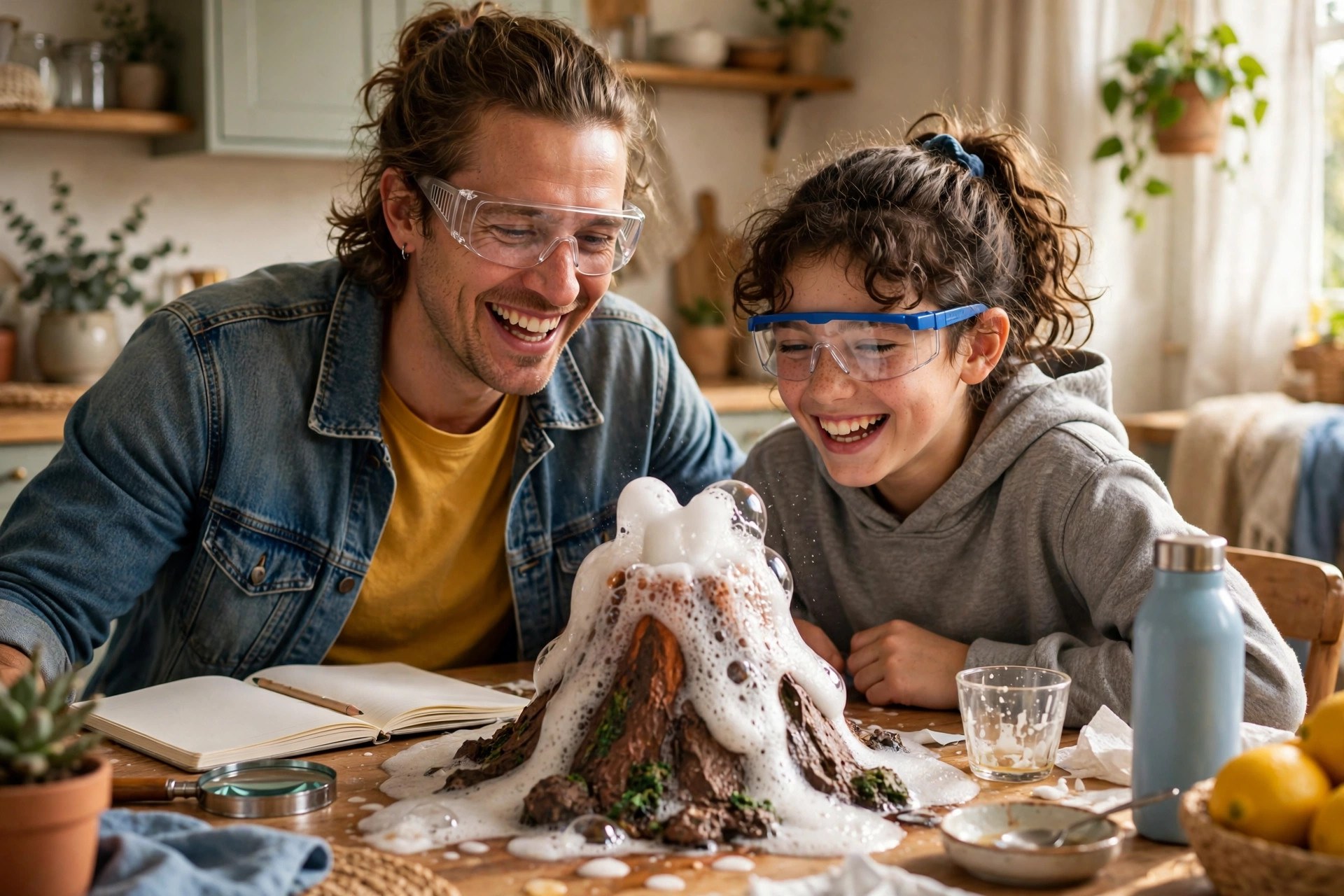
This strand is where the kitchen becomes a laboratory. Your child learns the difference between a pure substance — one kind of particle throughout, like distilled water — and a mixture, like trail mix or salt water, where two or more substances are combined without a chemical change. They use the particle theory of matter to explain why solids keep their shape, liquids flow, and gases spread out, and they investigate solutions: what dissolves in what, and what changes how fast something dissolves. Expect hands-on work here — mixing, filtering, evaporating, and separating mixtures. The vocabulary can feel heavy at first (solute, solvent, concentration), so ask your child to explain each new word with an example from home. If they can explain it, they understand it.
4. Structures and Mechanisms: how things stand up
This is the design-and-build strand, and it is where a lot of Grade 7 students discover they like science. Your child learns about forces — pushes and pulls — and how structures are designed to withstand them. They study internal and external forces, compression and tension, and why triangles show up everywhere in bridges and towers. The strand usually ends with a design challenge: build a structure that can hold a load, test it, and improve it. This is engineering thinking in its simplest form — plan, build, test, redesign. If a popsicle-stick bridge comes home, ask what broke first and why.
5. Earth and Space Systems: heat in the environment
The final strand is about heat: how it moves and what it does to our world. Your child learns the three ways heat travels — conduction through direct contact, convection through moving fluids like air and water, and radiation through empty space, which is how the sun's heat reaches us. They connect this to the greenhouse effect, which keeps Earth warm enough for life, and to how human activity is changing it. It is a good one for dinner-table talk: why does a black car feel hotter than a white one on a sunny day? That is radiation and absorption, and your child can now explain it.
6. The skills underneath the content
Here is the part parents miss most often: in Grade 7, how your child does science matters as much as what they know. Teachers assess scientific investigation skills — asking a good question, planning a fair test with one variable changed at a time, recording observations carefully, and drawing a conclusion that matches the evidence. They also assess communication: can your child explain what they found, using the right vocabulary? When a test comes home with a lower mark than expected, the gap is often in these skills rather than in the facts. Practise them at home by asking "how could we find out?" instead of looking up the answer — that one question builds the exact habit the curriculum is measuring.
7. How tutoring can help
Science in Grade 7 is where small gaps start to matter. A student who never quite understood mixtures in the fall can struggle when the same particle ideas return in later grades. If your child's fall progress report shows science as an area to watch, a few focused sessions with an Ontario-certified teacher can fill the gap while it is still small — revisiting the tricky vocabulary, working through the investigation skills step by step, and building the confidence to ask questions in class. And because our first session is free, you can see whether it helps before committing to anything.
Grade 7 science is a big year: four strands, four ways of thinking, and a real step up in how students are expected to investigate and explain what they find. The good news is that every strand connects to something your child can see, touch, or test at home — a pond, a kitchen mixture, a popsicle-stick bridge, a sunny car. Talk about the science you notice together, ask "how could we find out?", and the curriculum stops feeling like a mystery. And if a strand is not clicking, that is exactly what a good tutor is for.
Try a Free Session
The best way to see if tutoring is right for your child is to try it. Book a free trial session with one of our Ontario-certified teachers — online or in person in Brampton — and get an honest sense of where your child stands and what would help most.
Prefer to talk first? Call (647) 624-8393 or message us on WhatsApp.