

The Truth About Learning Styles (and What Works Instead)
 October 23, 2026
-
 6 Min
Why "Visual Learner" Labels Don't Matter — and the Study Strategies That Do
You've probably heard it at a parent-teacher interview, or read it in a school report: "Your child is a visual learner." The idea is comforting: every child has their own learning style — visual, auditory, or hands-on — and once you know your child's style, you can finally help them learn the way their brain wants. It sounds so reasonable that most of us never question it. But as a teacher, I have to tell you the truth: the research does not support it. And what actually works is better news anyway.
1. What "learning styles" claims
The learning styles theory — usually called VAK, for visual, auditory, and kinesthetic — says that people learn best when teaching matches their preferred style. Visual learners need pictures and diagrams; auditory learners need things explained out loud; kinesthetic learners need to move and touch. The promise is a simple one: match the lesson to the style, and learning improves. Schools have printed posters of it, bought classroom sets of quizzes to identify each child's style, and shaped whole lesson plans around it. It is one of the most popular ideas in education. It is also one of the least supported by evidence.
2. What the research actually found
In 2008, a team of cognitive scientists led by Harold Pashler published a major review in the journal Psychological Science in the Public Interest, examining decades of studies on learning styles. Their conclusion: there was no credible evidence that teaching students in their preferred style improved learning. Later reviews reached the same place. Preferences are real — a child can genuinely prefer diagrams — but preference is not effectiveness. A child who prefers diagrams does not learn fractions better from diagrams than from a good verbal explanation. Liking a method and learning from a method are two different things.
3. Why the idea feels so true
If the evidence is so weak, why does learning styles feel so obviously right to so many parents and teachers? Because it contains a grain of truth. Children genuinely differ: one child concentrates better with music on, another needs silence; one picks up new words by hearing them, another by writing them down. Those differences are real, and honouring them is just good parenting. The mistake is treating a preference like a learning channel — as if information delivered through the "wrong" channel bounces off your child. Brains don't work that way. Your child's brain will absorb a well-explained idea through whatever sense is available. What matters is not the channel — it's what the brain is doing with the information.
4. What works instead: make the brain retrieve
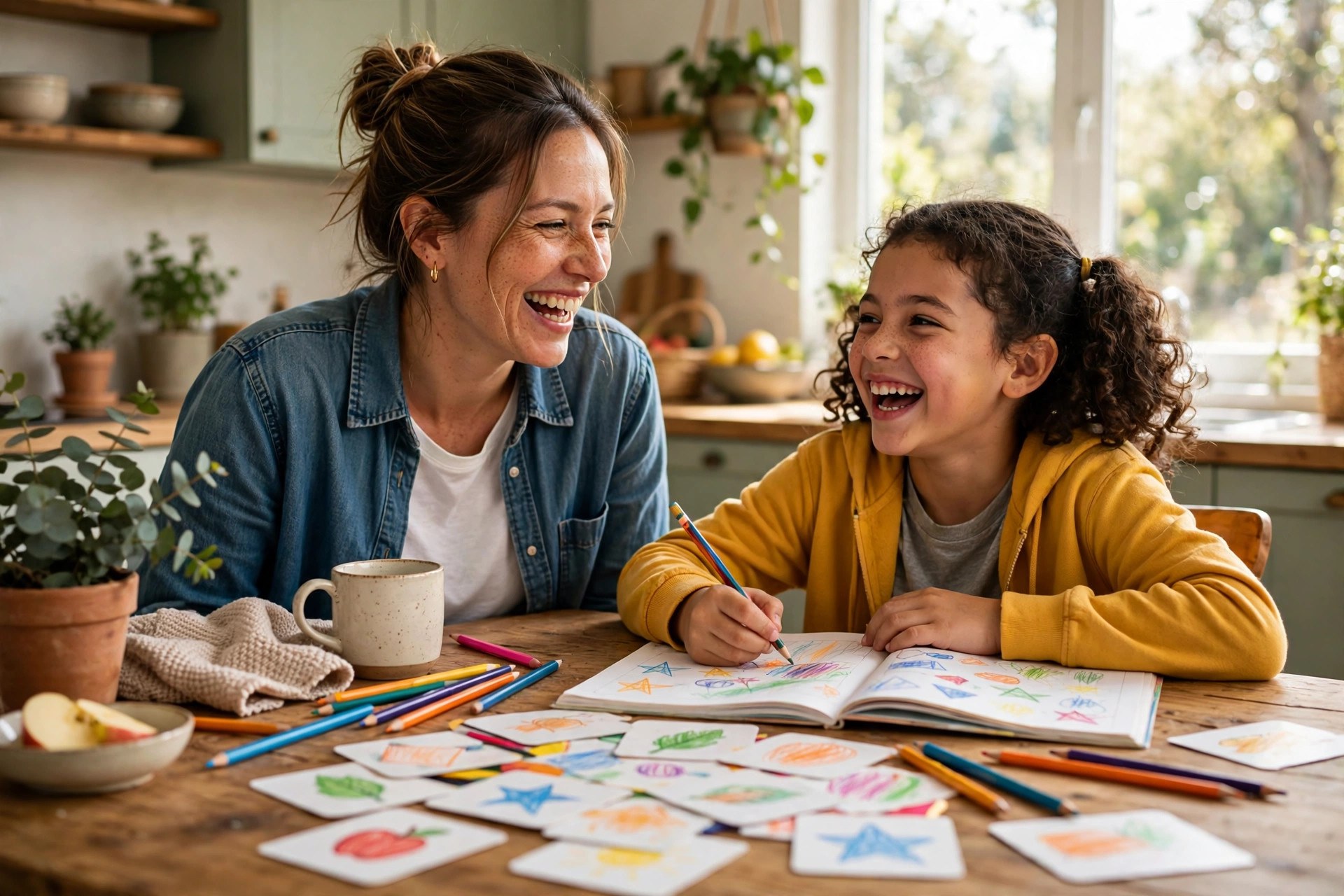
Here is the strategy with some of the strongest evidence in all of learning science: retrieval practice. Instead of re-reading notes or highlighting a textbook (both feel productive but barely move the needle), your child closes the book and tries to recall what they know. Ten minutes with homemade flashcards or a blank-page "write everything you remember" exercise does more for memory than an hour of re-reading, because recalling information strengthens the memory itself. Tip for home: after homework, ask your child to teach you the lesson in their own words. If they can explain it, they know it. If they can't, you've just found the exact spot to work on.
5. What works instead: space it out
The second powerhouse is spacing. Studying multiplication facts for 20 minutes a day over five days beats a 100-minute cram the night before — even though the total time is the same. Spacing works because forgetting a little between sessions, then retrieving the information again, builds stronger, longer-lasting memories. For parents, this is practical advice: help your child start review earlier and in short bursts. If the Grade 3 or 6 EQAO is coming this spring (May 4 to June 8, 2027), a little steady practice starting now beats a panic in April. And during report-card season — with fall progress reports landing around now in October and November — short nightly review sessions are the single best habit a student can build.
6. What works instead: words plus pictures — for everyone
Here is the irony: diagrams and visuals really do help learning — just not only for "visual learners." Pairing words with images helps all students, because two representations give the brain two paths to the same idea. A fraction wall with both the shaded parts and the written fractions, a timeline alongside the history paragraph, a labelled diagram next to the science definition — these strengthen understanding for every child in the class. The same goes for concrete examples: abstract ideas become stickier when anchored to something real. So keep the pictures, the colours, and the hands-on activities. Use them liberally. Just don't reserve them for the kids who "need" them — they help everyone.
7. How tutoring can help
The best thing about the strategies above is that they are coachable — and coaching is what tutoring does best. An Ontario-certified teacher can show your child how to quiz themselves instead of re-reading, set up a spaced review plan for the topics coming up in class, and turn abstract homework into clear, concrete examples that stick. Whether your child thinks of themselves as a "visual learner" or not, a few sessions of learning how to learn — retrieving, spacing, connecting words to pictures — pays off in every subject, in every grade, and on every test ahead.
So the next time someone labels your child a "visual learner" or a "hands-on learner," take it for what it is: a description of what your child enjoys, not a limit on how they can learn. Your child's brain isn't wired to receive information through one special channel — it's wired to remember what it works hard at. Teach it to retrieve, space out the practice, and pair words with pictures, and it will do the rest.
Try a Free Session
The best way to see if tutoring is right for your child is to try it. Book a free trial session with one of our Ontario-certified teachers — online or in person in Brampton — and get an honest sense of where your child stands and what would help most.
Prefer to talk first? Call (647) 624-8393 or message us on WhatsApp.