

Helping Your Child Memorize Times Tables Without Tears
 November 18, 2026
-
 6 Min
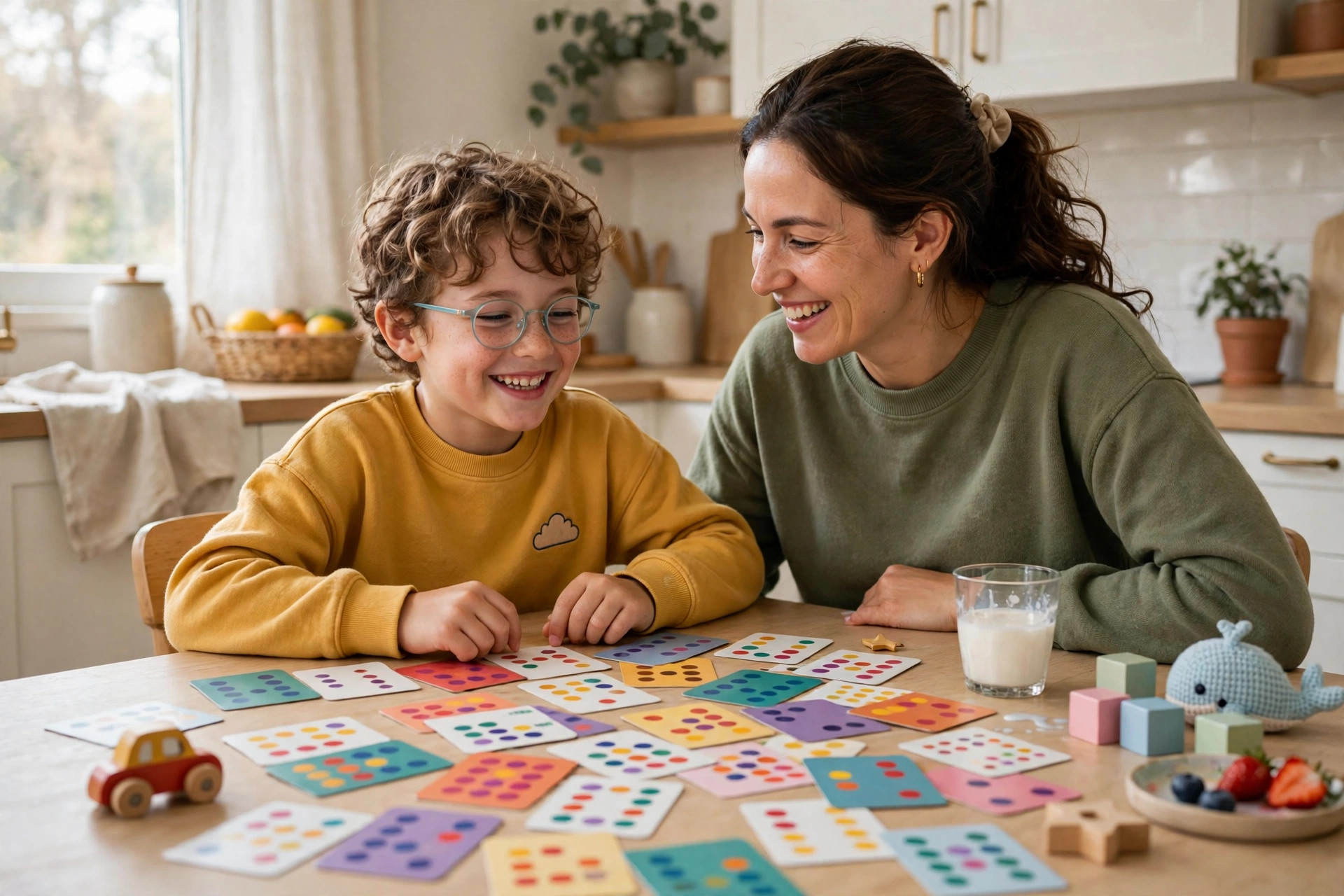
Short, Happy Practice Beats Long, Tearful Drills — Every Time
If homework time has ever ended in tears over 7 × 8, you are not alone. Times tables are one of the first places where school math stops feeling like play and starts feeling like a test of memory. The good news: memorizing them does not have to be a nightly battle. With the right order, the right tricks, and five minutes a day, most children can build fluency without a single tear.
1. Why times tables matter more than they look
Multiplication facts are the foundation under almost everything that comes next in math: long division, fractions, multi-digit multiplication, and later algebra. When a child has to stop and work out 6 × 7 from scratch every time, their working memory is busy doing arithmetic instead of thinking about the actual problem. In Ontario, children start learning multiplication in Grade 3 and build fluency through the junior grades — no need to rush, but real value in making it automatic. The goal is not speed for its own sake; it is freeing up your child's brain to think about the math, not the facts.
2. Start with the easy wins — and say so out loud
Begin with the facts your child probably already knows and name the win: the 1s (the number stays the same), the 10s (just add a zero), the 2s (doubling), and the 5s (counting by fives). That is nearly half the times table, learned almost for free. When your child sees how much they already know, their confidence jumps — and confidence is the fuel for the harder facts. For the 5s, point out that the answers always end in 5 or 0. For the 10s, let your child discover the pattern (10, 20, 30…) before you explain it. Discovery sticks far better than being told.
3. Teach the tricks that actually work
A few honest shortcuts make the middle of the table much friendlier. The 9s have the most famous trick of all: the digits of every answer add up to 9 (9, 18, 27, 36…), and the tens digit counts up while the ones digit counts down. The squares — 3 × 3, 4 × 4, 5 × 5 — are worth memorizing as a little set of their own. And the single most useful idea in the whole times table is commutativity: once your child knows 3 × 7, they also know 7 × 3. Say it out loud every time: "You already know this one — it's just the other way around." That one idea cuts the facts to learn nearly in half.
4. Five minutes a day beats an hour on Sunday
Cramming does not work for memorization — one of the most solid findings in learning research, and just as true for times tables as for spelling. Short, spaced practice is what moves facts into long-term memory. Pick one fact family a week — say, the 6s — and practise it for five minutes a day: at breakfast, in the car, while dinner cooks. Mix it up: flashcards some days, you calling out the question other days, and some days they quiz you (children love catching a parent out). After a week, move to the next family, but keep the old ones in rotation for a minute or two. Ten calm minutes spread across the week beats an hour of drilling on a Sunday afternoon.
5. Turn it into a game, not a test
The moment practice feels like a test, anxiety shuts learning down — and a timed quiz at the kitchen table can feel exactly like a test. So make it a game instead. Multiplication War with a deck of cards (flip two, multiply, highest product takes the cards) is a family favourite for a reason. Dice games work the same way: roll two dice, multiply, keep score. Skip-counting songs help the facts stick through rhythm, and real life is full of practice in disguise: "We need 4 packs of 6 juice boxes — how many is that?" or doubling a recipe. The facts your child uses to solve a real problem are the facts they remember.
6. What to do when your child freezes or melts down
A freeze is not defiance, and tears are not laziness. When a child goes blank on a fact they knew yesterday, stress has simply crowded out the memory. The worst thing you can do in that moment is repeat the question louder or add a timer. Instead, pause and give them a way back in: "Let's count up from a fact you do know — what's 5 × 7? Now add one more 7." Let them use a times-table chart while they practise — it is a tool, not cheating — and gradually cover up the facts they have mastered. If homework is ending in tears most nights, step back and talk to the teacher; your child may need a different approach.
7. How tutoring can help
Sometimes the hardest part of times tables is that the practice happens at the kitchen table, where the parent-child relationship gets in the way. An Ontario-certified teacher can take that pressure off: a calm five-minute routine, games matched to exactly the facts your child is shaky on, and patient repetition that is hard to manage after a long day at work. A few sessions are often enough to find the gaps — usually only three or four stubborn facts, not the whole table. The goal is a child who says "I know this one" instead of "I'm bad at math."
Times tables are not a talent test — they are a memory skill, built with small, regular, happy practice. Start with the easy wins, teach the tricks, keep it to five minutes a day, and make it a game. Your child does not need to learn the whole table this week. They just need to believe they can learn it — and then, one fact family at a time, they will.
Try a Free Session
The best way to see if tutoring is right for your child is to try it. Book a free trial session with one of our Ontario-certified teachers — online or in person in Brampton — and get an honest sense of where your child stands and what would help most.
Prefer to talk first? Call (647) 624-8393 or message us on WhatsApp.