

French Immersion vs. Core French: Which Path Is Right for Your Child?
 October 5, 2026
-
 6 Min
6 Min
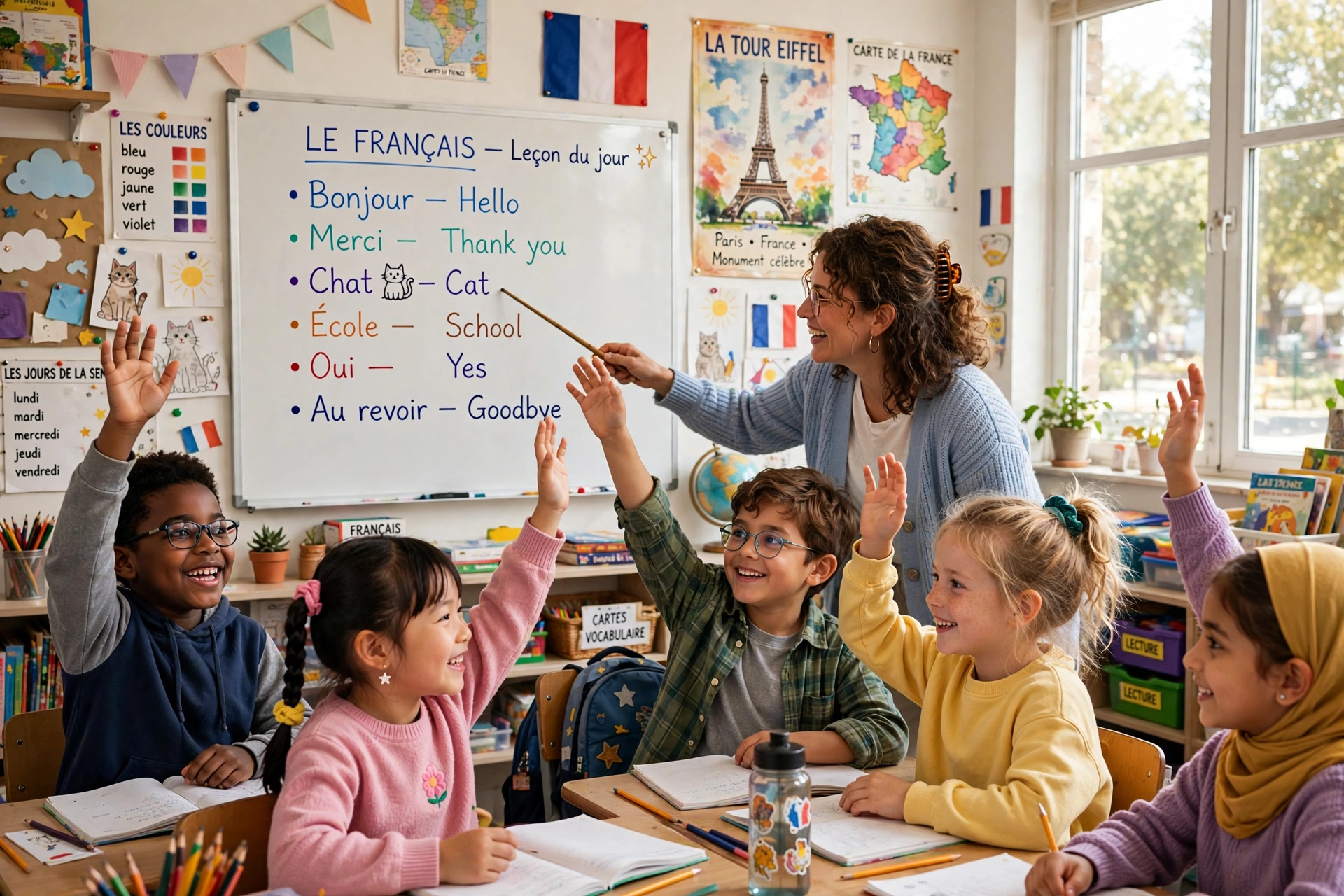
How Each Path Works in Ontario, What Your Child Will Actually Gain, and the Questions to Ask Before You Choose
It is one of the first big school decisions Brampton parents face. Sometime in the senior kindergarten year, the school board asks: would you like your child to start French Immersion next fall, or stay in the regular English stream with Core French? It feels like a small checkbox on a registration form, but it sets the course of your child's schooling for years. Here is a clear, honest breakdown to help you decide.
1. What Core French actually looks like
Core French is the default path. Your child takes most subjects in English, and French is studied as its own subject starting in Grade 4. By the end of Grade 8, Ontario students are expected to have received roughly 600 hours of French instruction. Classes cover the fundamentals: everyday conversation, basic reading and writing, and vocabulary for common topics. In high school, every Ontario student must earn at least one French credit to graduate with their diploma. Core French produces a solid foundation — enough to read simple texts, carry a basic conversation, and write a short paragraph — but not fluency.
2. What French Immersion actually looks like
French Immersion is a different model entirely: French becomes the language of instruction, not just a subject. In most Ontario boards, including here in Peel, it begins in Grade 1, with applications usually due the winter before. In the early grades, most of the school day happens in French, with English language instruction layered in as students get older. Subjects like math, science, and social studies are taught in French, so students pick up the language naturally while learning everything else. Students who stay in immersion through high school typically work toward an immersion certificate by completing around ten French-language courses. The result is genuine, lasting bilingualism.
3. The real difference: what each path produces
Ontario's French programs are built around the Common European Framework of Reference — the A1 to C2 scale used to describe language ability worldwide. A Core French student typically finishes Grade 8 with basic skills: handling familiar, everyday situations in French. A French Immersion student commonly finishes Grade 8 able to understand and produce French at an intermediate level or higher — reading and writing at length, discussing real topics, and using French to learn other subjects. That is the heart of the decision: Core French gives your child exposure to French, while immersion gives them French as a working skill. If bilingualism is a goal — for government jobs, many careers, or simply as a life asset — immersion is the path that gets there.
4. The myths: who immersion is actually for
First: immersion is not only for "gifted" kids. Research consistently shows that most children — across a wide range of abilities — do well in immersion, and it is not reserved for top students. Second: you do not need to speak French yourself. Boards say this plainly: parents support immersion the same way they support anything else — by encouraging effort and routine, not by teaching the language. Where you should think carefully is around fit: if your child is already struggling significantly with reading and writing in English, or has a learning plan, talk with the school before deciding. Many students with extra support needs do succeed in immersion — but it's worth a conversation first.
5. Five questions to ask before you decide
First: are you ready to stay the course? Immersion works best when families commit through elementary — the payoff is cumulative. Second: is the school logistics workable? Immersion isn't always offered at your home school, so check busing and location. Third: how will you handle French homework? If you don't speak French, you can still help with routines — translation apps, the school's online resources, and simply sitting with your child while they work. Fourth: does your child love stories, songs, and word games? Those kids tend to love immersion. Fifth: have you talked to your school? A five-minute conversation with your child's teacher about your specific child is worth more than any article.
6. What if you change your mind later?
This is the question parents are often afraid to ask: what if we choose immersion and it isn't working? Here is the reassurance — students can move from immersion back to the English stream with Core French, and schools support that transition. It is better to switch deliberately than to struggle silently. Going the other direction is harder: most boards don't let students join immersion late the way they could in Grade 1, though some offer Extended French starting in Grade 7 as a middle ground. The practical takeaway: if you're on the fence, it's generally easier to start in immersion and step back than to start in core and try to step in.
7. How tutoring can help
Whether your child is in immersion or core, there are predictable rough patches. Immersion students sometimes hit a wall when the class pace picks up or when written French assignments get serious — a few targeted sessions with an Ontario-certified teacher can rebuild that confidence before small gaps become big ones. Core French students, meanwhile, often cruise until the marks suddenly dip in the senior grades, when verbs, tenses, and writing pile up at once; focused help at that point pays off fast. And if you're weighing immersion for a younger child, a free trial session is a great place to get an honest read on where your child's reading and language skills stand first.
There is no universally right answer here — there is the right answer for your child. Core French is a sensible, low-pressure path that gives every Ontario student a foundation in the country's second language. French Immersion is a commitment that, done well, leaves your child genuinely bilingual. Whichever path you choose, choosing deliberately is already the most important part.
Try a Free Session
The best way to see if tutoring is right for your child is to try it. Book a free trial session with one of our Ontario-certified teachers — online or in person in Brampton — and get an honest sense of where your child stands and what would help most.
Prefer to talk first? Call (647) 624-8393 or message us on WhatsApp.